دبي، الإمارات|الإثنين – الجمعة: 8:30 ص – 6:00 م | السبت: 9:00 ص – 2:00 م
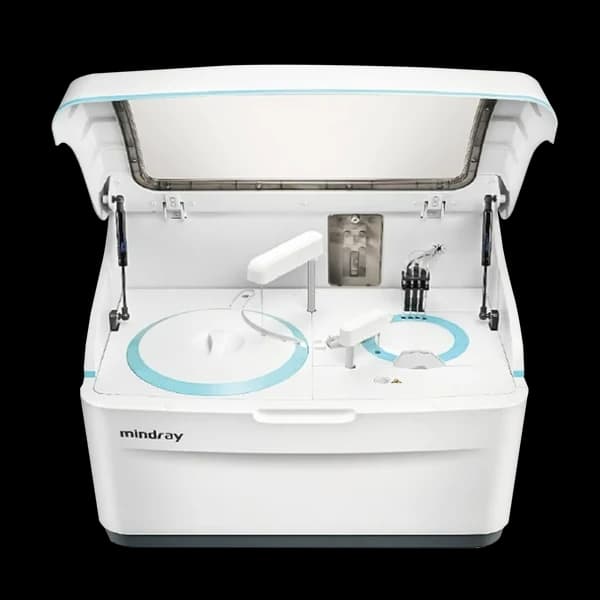
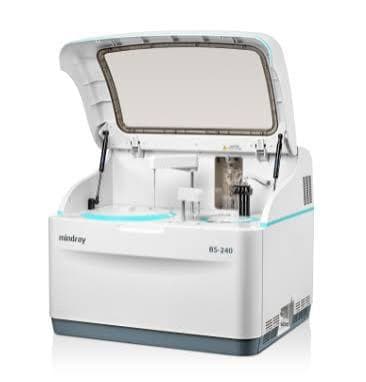
Mindray BS-280 Automatic Biochemistry Analyzer
The Mindray BS-280 Automatic Biochemistry Analyzer is a random-access, discrete automated clinical chemistry analyzer designed to support efficient and reliable biochemical testing in hospitals, diagnostic centres, and clinical laboratories. With a throughput of up to 200 tests per hour for biochemistry and up to 400 tests per hour with the optional ion-selective electrode (ISE) module, it supports routine laboratory testing and high-volume diagnostic workflows.
The BS-280 combines automated sample handling, precision dispensing, intelligent mixing, temperature-controlled reactions, and a multi-wavelength optical system to support consistent biochemical analysis. Its broad test menu covers liver and renal function, lipid profiles, glucose metabolism, myocardial enzymes, specific proteins, and other routine clinical chemistry parameters.
With automated calibration, quality control functions, retesting capabilities, and laboratory connectivity, the Mindray BS-280 helps streamline laboratory workflows and manage routine diagnostic testing efficiently.
Key Features
High-speed testing: Processes up to 200 biochemical tests per hour and up to 400 tests per hour with the ISE configuration.
Broad parameter coverage: Supports simultaneous detection of up to 83 parameters.
Multiple reagent positions: Accommodates up to 80 reagent positions.
Versatile sample compatibility: Supports serum, plasma, urine, cerebrospinal fluid (CSF), and whole blood for HbA1c testing.
Precision sample handling: Sample volume range of 2–45 µL with volume tracking.
Intelligent probe protection: Features liquid-surface detection and anti-collision protection.
Automated probe cleaning: Includes intelligent 3D needle cleaning to help minimise carryover.
Low cross-contamination: Specified cross-contamination rate of less than 0.05%.
Uniform reaction mixing: Nano-polishing mixing technology supports thorough mixing during reactions.
Temperature-controlled reaction system: Maintains reaction temperature at 37 ± 0.1°C.
Advanced optical measurement: Uses eight wavelengths between 340 and 670 nm for photometric analysis.
Automated maintenance functions: Includes multi-stage cuvette cleaning, calibration, quality control, and retesting functions.
Reagent management: Supports reagent validity management and reaction monitoring.
Laboratory connectivity: Provides TCP/IP and RS-232C interfaces.
العلامة التجاريةMindray
ضمان رسمي
توصيل سريع في كافة الإمارات
دعم فني وطبي حيوي معتمد
المواصفات الفنية والهندسية
توصيات سريرية معتمدة
عرض كافة أجهزة Laboratory Equipment